Sounds like the beginning of a motivational speech.
What happens when that statement has to do with a dark reality. What if that statement had to do with being MISLEAD and with TRUTHS BEING MIXED IN WITH LIES & MISDIRECTION.
Have you ever been told you suffer from THE METABOLIC SYNDROME?
Probably not, and yet THE METABOLIC SYNDROME is the root cause of what most of us are receiving treatments for
There are 5 main conditions or risk factors that are present with The Metabolic Syndrome, and a person is usually diagnosed when at least 3 are present. They are:
- Abdominal obesity – excess fat around the waist (waist circumference >40 inches in men or >35 inches in women).
- High triglycerides – blood triglycerides ≥150 mg/dL.
- Low HDL cholesterol – HDL <40 mg/dL in men or <50 mg/dL in women.
- High blood pressure – ≥130/85 mmHg or on medication for hypertension.
- High fasting blood glucose – ≥100 mg/dL or on medication for elevated blood sugar.
So, while five conditions make up metabolic syndrome, it’s their combination that constitutes the syndrome — not each one as a separate illness.
This is what the SYMPTOMATIC ILLNESSES from The Metabolic Syndrome looks like:
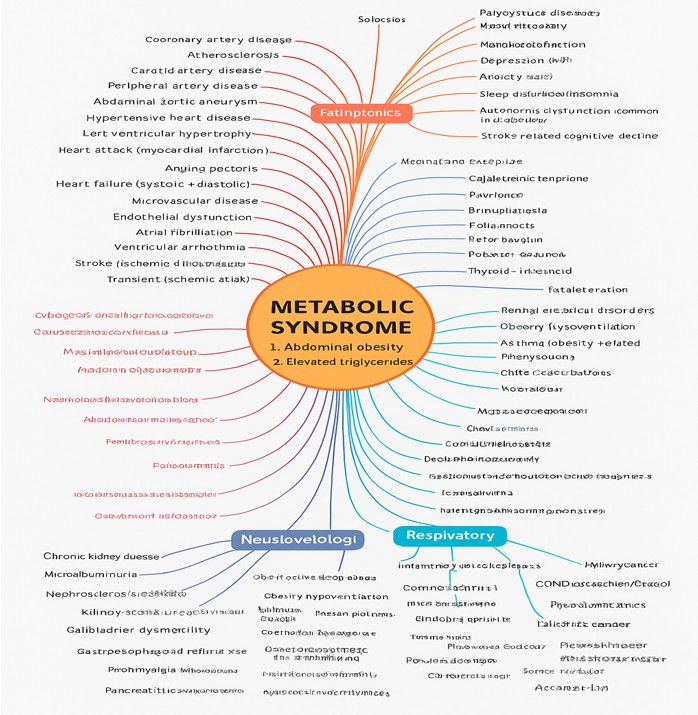
Yeah…..blurs my eyes too! How about this…see below, and find the “illness or illnesses” you or a loved one is being treated for
Cardiovascular & Circulatory Diseases
- Coronary artery disease
- Atherosclerosis
- Carotid artery disease
- Peripheral artery disease
- Abdominal aortic aneurysm
- Hypertensive heart disease
- Left ventricular hypertrophy
- Heart attack (myocardial infarction)
- Angina pectoris
- Heart failure (systolic)
- Heart failure (diastolic)
- Microvascular disease
- Endothelial dysfunction
- Atrial fibrillation
- Ventricular arrhythmia
- Stroke (ischemic)
- Stroke (hemorrhagic, less common but related)
- Transient ischemic attack (TIA)
Glucose, Insulin, and Pancreatic Disorders
- Insulin resistance syndrome
- Prediabetes
- Type 2 diabetes
- Diabetic neuropathy
- Diabetic nephropathy
- Diabetic retinopathy
- Diabetic foot ulcer
- Pancreatic beta-cell dysfunction
- Pancreatitis (metabolic or triglyceride-induced)
- Hypoglycemia (secondary to insulin dysregulation)
Neurological & Cognitive Disorders
- Alzheimer’s disease (Often called “Type 3 diabetes”)
- Vascular dementia
- Mild cognitive impairment
- Cerebral small vessel disease
- Parkinson’s disease (metabolic contribution)
- Depression (metabolic/inflammatory)
- Anxiety (metabolic/inflammatory)
- Migraine
- Sleep disturbances/insomnia
- Autonomic dysfunction (common in diabetes)
- Stroke-related cognitive decline
Endocrine & Hormonal Disorders
- Polycystic ovary syndrome (PCOS)
- Infertility (male and female)
- Menstrual irregularity
- Hypogonadism (low testosterone)
- Erectile dysfunction
- Hormonal acne
- Early puberty (linked to obesity/insulin resistance)
- Thyroid dysfunction (esp. subclinical hypothyroidism)
- Gestational diabetes
- Pregnancy-induced hypertension
Renal & Urologic Disorders
- Chronic kidney disease
- Microalbuminuria
- Nephrosclerosis (hypertensive kidney disease)
- Kidney stones (uric acid–related)
- Glomerulosclerosis
- Diabetic nephropathy (also above, but distinct progression stages)
- Urinary incontinence (linked to obesity)
- Erectile dysfunction (vascular-renal overlap)
Digestive & Hepatic Disorders
- Nonalcoholic fatty liver disease (NAFLD)
- Nonalcoholic steatohepatitis (NASH)
- Cirrhosis (metabolic origin)
- Gallstones
- Gallbladder dysmotility
- Gastroesophageal reflux disease (GERD)
- Barrett’s esophagus
- Pancreatitis (hypertriglyceridemic form, also above)
- Colon polyps
- Diverticulosis
Inflammatory & Rheumatologic Conditions
- Chronic systemic inflammation
- Gout (hyperuricemia-related)
- Osteoarthritis (especially knee/hip due to weight load)
- Psoriasis (metabolic comorbidity)
- Rheumatoid arthritis (worse prognosis with metabolic syndrome)
- Fibromyalgia (linked via mitochondrial dysfunction)
- Chronic fatigue syndrome (metabolic variant)
- Periodontitis
Respiratory Disorders
- Obstructive sleep apnea
- Obesity hypoventilation syndrome
- Asthma (obesity-related phenotype)
- Pulmonary hypertension (secondary to obesity or OSA)
- COPD exacerbations worsened by insulin resistance
Cancers (linked to metabolic syndrome)
- Colorectal cancer
- Pancreatic cancer
- Liver cancer (hepatocellular carcinoma)
- Gallbladder cancer
- Esophageal adenocarcinoma
- Gastric cancer
- Kidney cancer
- Bladder cancer
- Prostate cancer (aggressive forms)
- Breast cancer (postmenopausal)
- Endometrial cancer
- Ovarian cancer
- Thyroid cancer
- Non-Hodgkin lymphoma (metabolic inflammation pathway)
- Multiple myeloma
Musculoskeletal & Functional Disorders
- Sarcopenic obesity (loss of muscle + fat gain)
- Chronic back pain (metabolic and mechanical)
- Tendonitis (inflammation-prone)
- Plantar fasciitis
- Carpal tunnel syndrome (increased incidence with insulin resistance)
- Reduced mobility syndrome
The path to illness is simple…INSULIN RESISTENCE – PRE-DIABETIC – TYPE 2 DIABETES – SYSTEMIC DISEASE.
Diabetes is the literal gateway to all the other illnesses. It is both a consequence and an accelerant of the entire metabolic syndrome.
Here’s the HAPPY ENDING…..Since anything is possible…..and therefore everything is possible…. there is a way out of this vicious cycle.
If we ate our way into this place….it is only logical that nutrition is the way out.
If you are sick and tired of being sick and tired, AND, if constant medications have not cured anything in your life, I encourage you to set up a FREE consult with our team of certified nutrition advisors and find your way back to METABOLIC HEALTH.